Conceptual Framework
1. ECOTOURISM
Ecotourism embodies the power of responsible travel to breathtaking natural areas, where the conservation of the environment and the well-being of local communities are the foundation. It also takes on the responsibility of educating both tourists and local people about environmental issues. Emphasising the conservation and preservation of natural resources makes it a subcomponent of Sustainable tourism.
Ecotourism is considered much more than a holiday at an “eco label hotel”. It encompasses a diverse range of activities, such as even a hiking/trekking plan with a small group, cycling in a forest alone, diving, planting trees, lodging for lemurs in Madagascar, or going on a safari at an African wildlife park, are all considered Ecotourism activities.
One crucial feature of Ecotourism is its inclusion of the local community. Tourists are encouraged to show more respect to the local people, to get to know their traditions, customs, and cuisine, and to shop locally, thus having the chance to gain deeper knowledge about the region. This helps prevent cultural erosion and ensures that ecotourism is culturally sensitive and beneficial.



Ecotourism goes beyond an ordinary holiday for the participants, it serves to benefit people and the environment through mindful planning and travel. By caring for the future of the environment, and the well-being of the local people you pass by, and by prioritising the exploration of the local cultures to experience unique moments. It ultimately leads to a greater awareness of diverse cultures and the environment, which summarises what an ecotourism experience should be.
As a planner, it is important to consider the enjoyment that visitors will get from participating in responsible travel. Strive to make their holiday as convenient as possible. Make it easy for travellers to be eco-tourists by presenting actionable behaviours throughout their journey, and ensure you create meaningful moments along the way.
1.1 Ecotourism principles
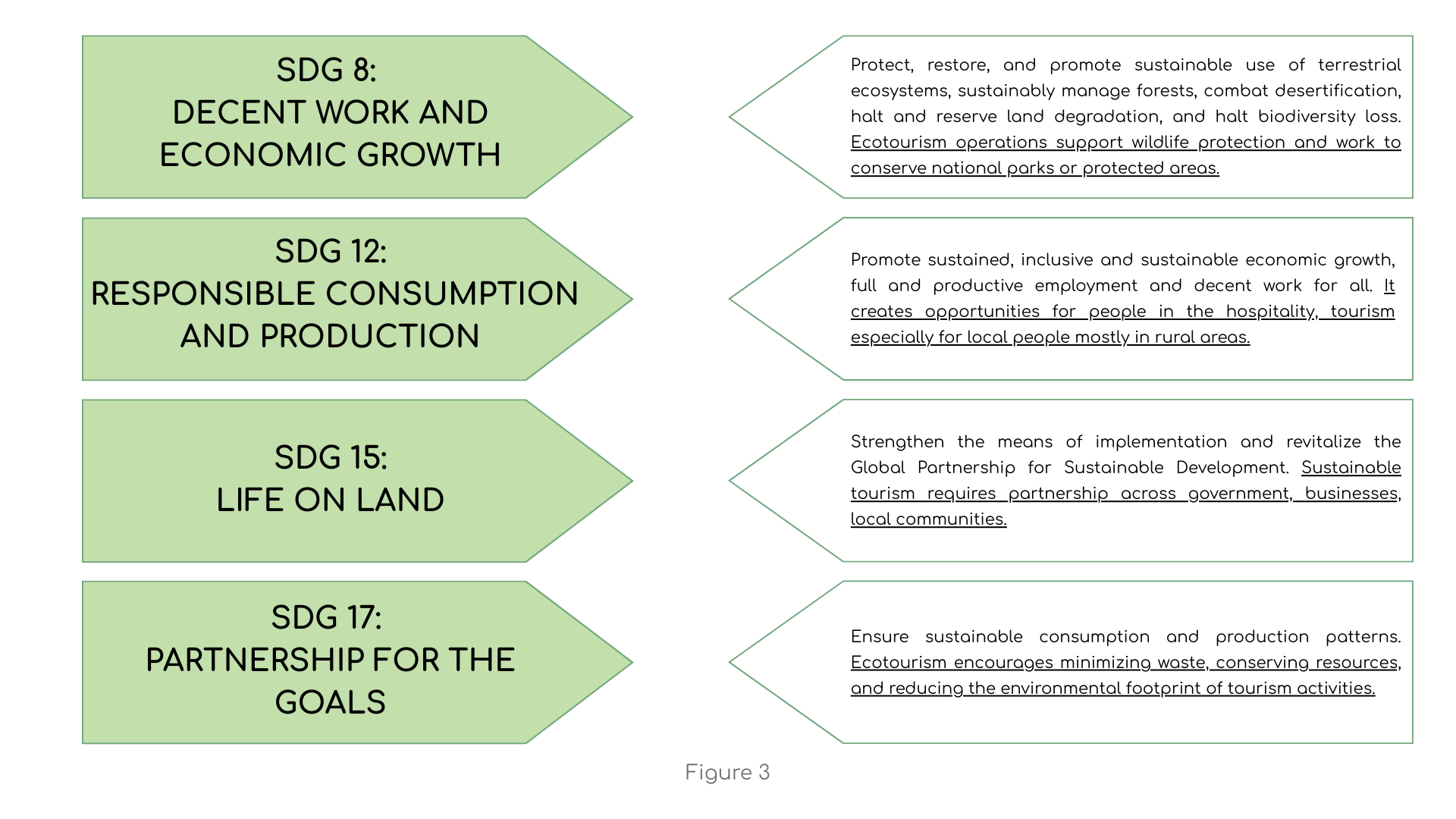
Ecotourism aims to provide positive experiences for both visitors and hosts while minimising the undesired impacts of tourism and even benefiting nature and host people in terms of economic, cultural, and conservation. The ecotourism concept has many core considerations at once, but if it needs to be summed up, there are 4 Cs of ecotourism, which are the main principles of Ecotourism.
1.2 Benefits and possible threats of Ecotourism
Ecotourism offers numerous benefits for the environment, local communities, and the tourism industry when well-planned and effectively implemented.
BENEFITS
- Promotes environmental awareness.
- Education for both locals and tourists.
- Provides income and employment opportunities for local communities.
- Encourages conservation and preservation of natural resources.
- Fosters respect and appreciation for cultures and traditions.
- Promotes reducing the carbon footprint.
- Supports artisans and small businesses.
- Emphasises the protection of endangered animal and plant species.

Even though ecotourism tries to encourage responsible travel and preserve nature, there are some possible threats. Careful planning, management, and collaboration with stakeholders should be considered as key components of Ecotourism in order not to face the threats.
THREATS
- Threat to indigenous traditions: Increased tourist exposure may cause dilution of local cultures.
- Seasonality: Jobs can be seasonal because of the ecotourism season at that place; so, which leads to economic instability for local communities.
- Greenwashing: With rising demand, some businesses may claim to be “eco-friendly” or “sustainable” to benefit economically, but they are misleading.

Image 5 earth.com
1.3 The future of Ecotourism: Trends and opportunities
Did you know that?
- 73% of millennials are willing to pay more for eco-friendly travel (Source: Nielsen).
- 55% of tourism operators expect sustainable travel to become a core requirement for travel planning in the next five years (Source: Skift research).
- 71% of global tourists say that they want to travel more sustainably over the coming 12 months (Source: Booking.com Sustainably Travel Report 2022).
- 68% of travellers said they were interested in learning about local sustainability efforts during their trips (Source: Virtuoso survey result in 2022).
As the world of Ecotourism and Sustainable Development continues to grow, so does the demand and interest for authentic and Sustainable travel. With this great pace of development and demand for Ecotourism, there have emerged some new trends.
- Eco-certification is becoming more important as people become more attracted to Ecotourism. By getting certified, you can offer added value to eco-conscious tourists.
- Tourists are getting more inclined to have a new practical experience: engaging in sustainable practices, like farming, handicrafts, or cooking with locals, etc.
- Eco-tourism applications make it very easy to connect travellers around the world with guides and accommodations. In this way, you can access many more tourists than the traditional old way of accessing them.
2. NEGATIVE ENVIRONMENTAL IMPACTS OF TOURISM
There is a very high number of arrivals that soars continuously, with over 1.4 billion tourists, in 2024, and unfortunately, the generally observed fact is that people are much more prone to wasting more food and water: Overusing plastics, polluting nature, and consuming more energy. In short, this means more carbon emissions, which accelerate climate change, putting ecosystems, economies, and human societies at risk.
Some statistics illustrate the urgent need for more sustainable and responsible tourism practices to mitigate the negative impacts of Tourism on the Earth:
The United Nations World Tourism Organisation (UNWTO) has determined that Tourism accounts for about 8% of global greenhouse gas emissions. Air travel alone accounts for an estimated 50% of tourism-related emissions.
If we consider carbon emissions from travel, ecotourism typically promotes the use of public transportation, which is the most environmentally friendly way to travel.
The UNWTO estimates that tourism generates approximately 1.5 billion tons of waste annually, and Tourism is one of the largest producers of plastic waste, which is one of the most harmful wastes for the Earth.
Ecotourism is a type of tourism that encourages recycling, avoiding single-use materials, and leaving no waste behind.
UNESCO World Heritage Centre reported that up to 60% of UNESCO World Heritage Sites were at risk of being “diluted or commodified” due to mass tourism.
Ecotourism, in contrast to mass tourism, promotes smaller group travel that minimises disturbance to local communities. Ecotourists are encouraged to appreciate and respect local cultures while exploring the destination. Additionally, ecotourism collaborates with residents by hiring them, encouraging visitors to shop from them, and valuing their knowledge of the area.
3. WHAT IS SUSTAINABLE DEVELOPMENT?
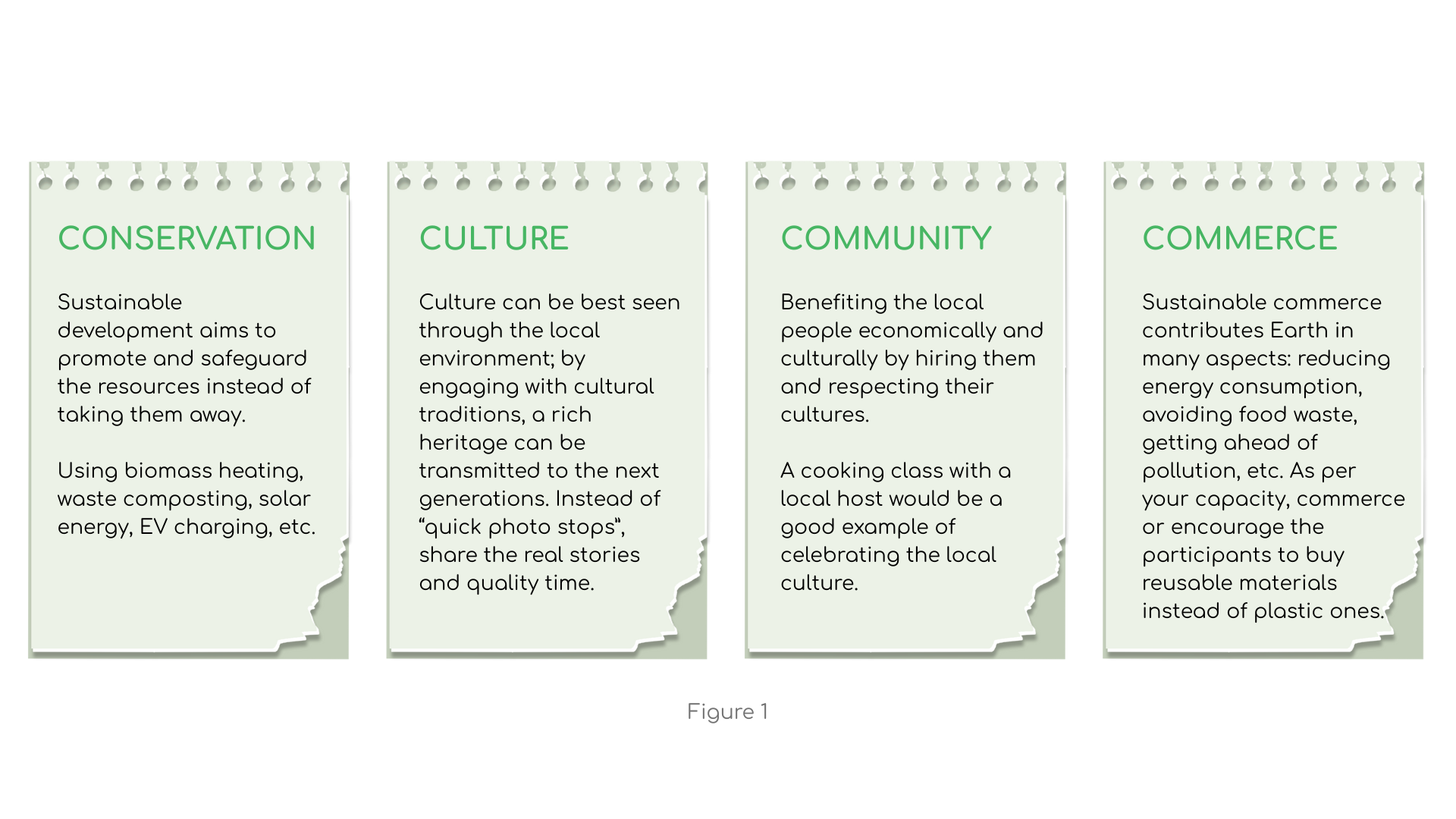
First, Sustainable Development is a continuous process that requires constant monitoring of its impacts, and more importantly, being proactive; and of course, so does Sustainable Tourism. Sustainability is rooted in the suitable balance of these three dimensions: environmental, economic, and ethical (sociocultural aspects) of tourism development to guarantee its long-term sustainability.
Sustainable Tourism does not refer to a type of Tourism; rather, it is an aspiration for all tourism forms to be sustainable for the next generations.
3.1. Sustainable Development Goals (SDGs)
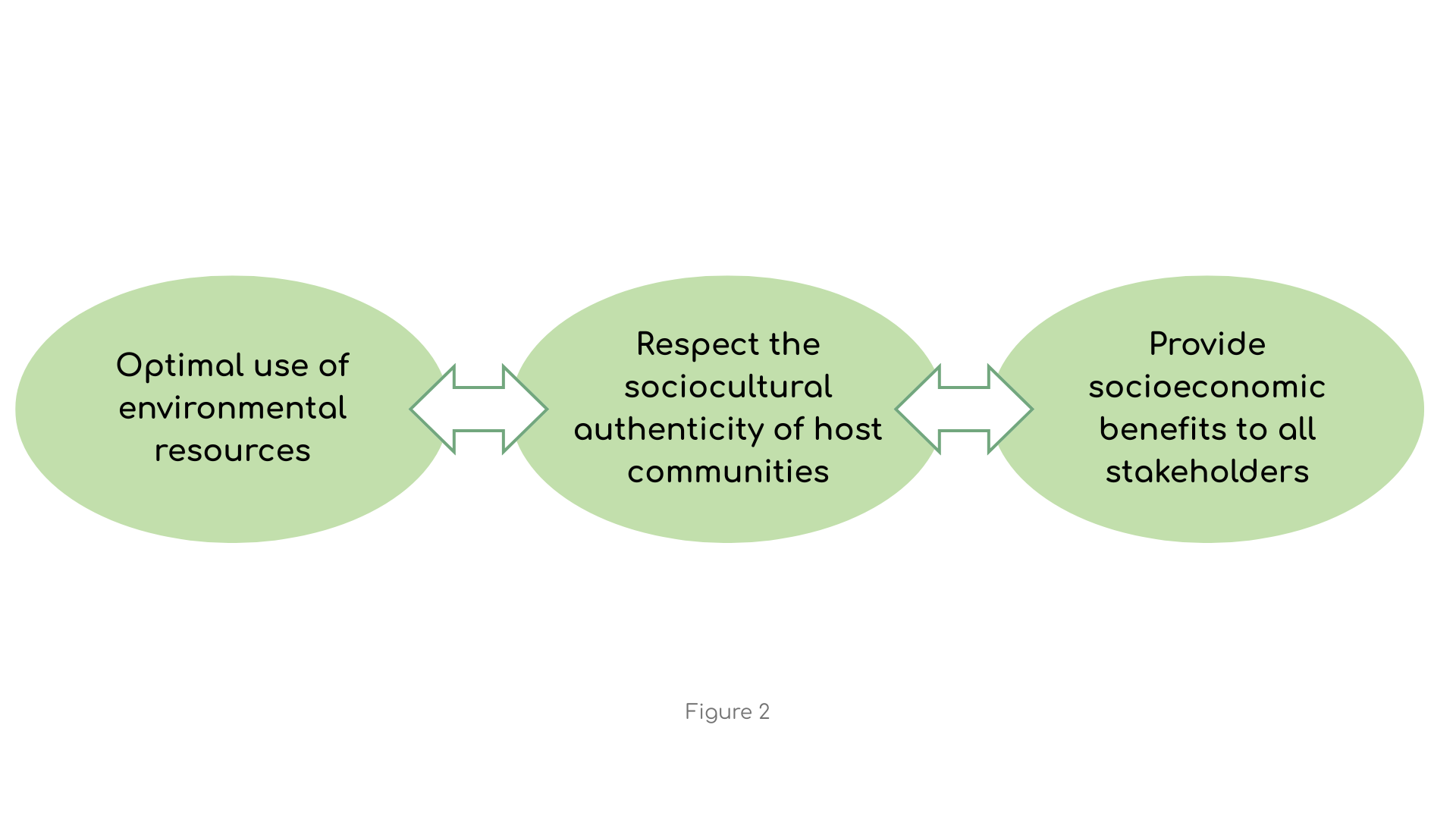
Ecotourism is somehow linked to almost all the Sustainable Development Goals (SDGs), with some key ones closely related to Ecotourism. Please match the related SDGs with the United Nations’ description and example: